A Multi-RAG Clinical Research AI Agent Saving €300,000 a Year
The interview is in Italian, the language it was recorded in.
In short: from problem to solution
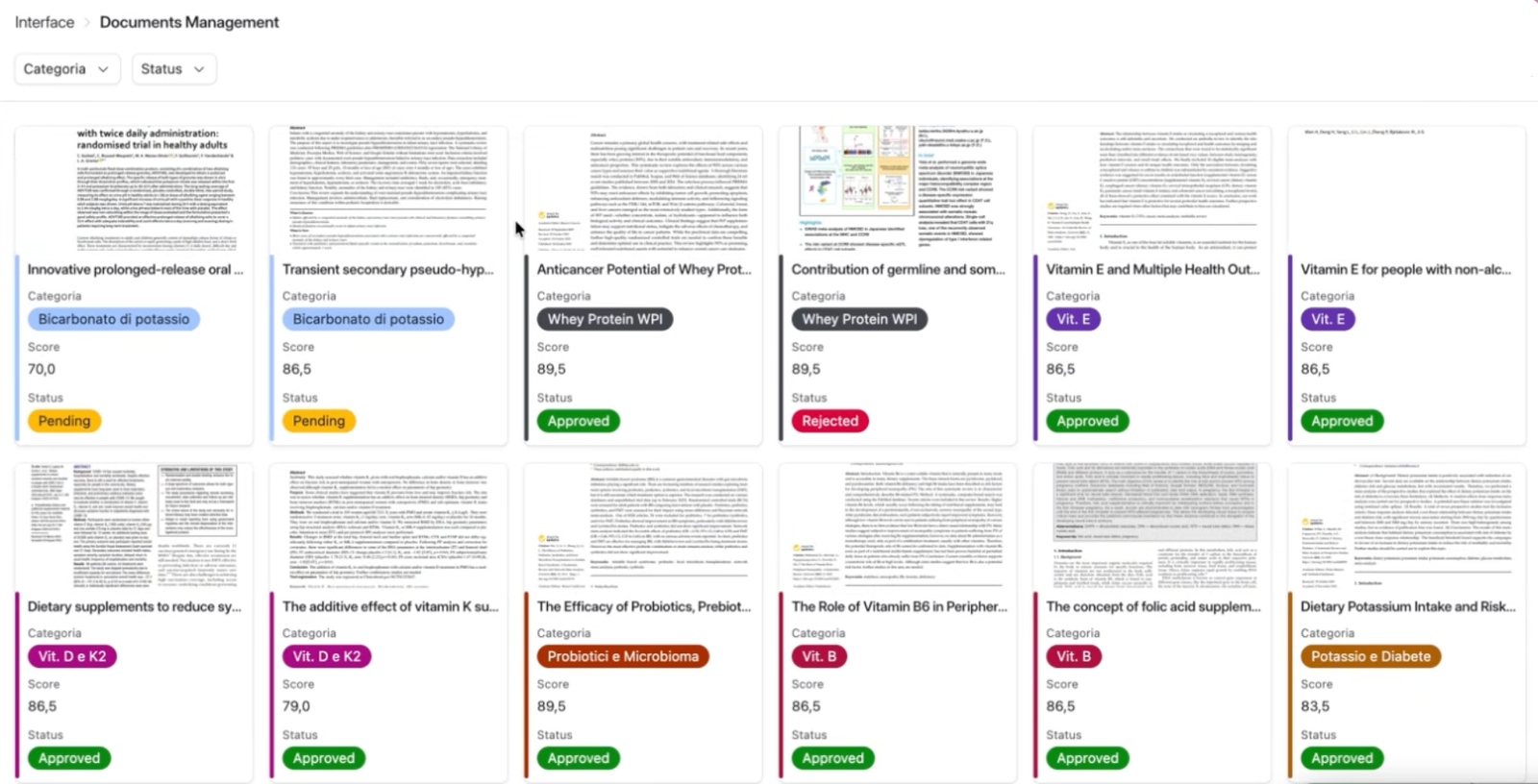
- The problem: Swiss Natural Med could manually analyse only 0.001% of the scientific papers published each year, with clinical response times of up to 48 hours for a single patient request.
- The solution: a three-tier Multi-RAG agentic system that combines a validated clinical history, a proprietary internal library and real-time access to PubMed, with human oversight and continuous learning.
- The impact: 10,000 papers analysed a day, clinical answers in minutes, an estimated €300,000 saved a year and a measurable improvement in product quality.
The company
Swiss Natural Med (SNM) is a Swiss company specialising in next-generation food supplements, with a strict focus on biocompatibility and scientifically grounded formulations. Under the direction of Derry Procaccini, a researcher and entrepreneur with decades of experience in clinical nutrition, the company built its reputation on a simple principle: every product must be supported by the best available scientific evidence.
But when the best scientific evidence is spread across millions of papers published every year, that standard becomes impossible to hold with human effort alone.
The challenge: three critical bottlenecks
Before AI, Swiss Natural Med faced three structural limits that held back both growth and service quality.
The first was access to the data: reading by hand meant analysing only 0.001% of the scientific papers published each year on PubMed and the main databases. Derry Procaccini spent 80% of his day downloading and qualifying studies, an enormous amount of work that covered a microscopic share of the knowledge available.
The second was academic timelines: the collaborations with Swiss universities (SUPSI, USI), recognised centres of excellence in applied AI, ran on six-month development cycles. Too slow for a company that measures itself in weeks.
The third was clinical scalability: every patient question about drug interactions, dosages or contraindications took hours of specialist work. A quality service, but impossible to scale without multiplying the cost of medical staff.
0.001% of papers analysed · 48 hours per clinical answer · 3+ full-time researchers needed
10,000 papers a day · an answer in minutes · an estimated €300,000 saved a year
Before and after SNM Clinical Intelligence went live
The solution: SNM Clinical Intelligence
Martes AI built an agentic platform on a three-tier Multi-RAG (Retrieval-Augmented Generation) architecture, designed to operate with clinical precision while keeping human oversight at the centre of the process.
The system does not query a single source: it climbs the levels of depth dynamically, stopping at the first one that gives a sufficiently qualified answer. Each level is more computationally expensive than the last, but also far more powerful.
Level 1 - Historical Knowledge
The history of answers already validated by SNM doctors. The system first checks whether a similar question has already been answered and validated, which guarantees consistency and maximum speed.
Level 2 - Evidence Core
A proprietary library of papers already approved and scored by SNM's weighting algorithm. Only studies above the quality threshold enter this library.
Level 3 - PubMed real time
Querying the entire global PubMed library through its API in real time. Immediate access to millions of up-to-date papers, filtered by the scoring algorithm before they are used.
Human in the loop
The doctor reviews and validates the answer before it goes out. Every correction automatically recalibrates the weighting algorithm: the system learns from each interaction.
The three-tier Multi-RAG architecture of SNM Clinical Intelligence
Scoring and qualifying the papers
At the heart of the Evidence Core is a proprietary weighting algorithm developed together with Derry Procaccini. Every scientific paper entering the system is assessed across several dimensions: the methodological quality of the study, declared potential bias, the source of funding (industry-sponsored studies get a lower score), sample size and the reproducibility of the results.
Only a small share of studies clears the quality threshold and is admitted into the Evidence Core. The problem was never finding studies: PubMed publishes millions every year. The problem was that the vast majority are methodologically weak, and spotting them by hand took hours per paper.
The clinical response flow: from the patient's question to the reply
The platform's second module handles incoming clinical requests from patients. When a patient asks a question about a drug interaction, a dosage or a side effect, the system starts a structured, multi-stage process before the answer reaches them.
The patient's question comes in
For example "Insomnia, which supplement would you recommend?" or "Abdominal pain as a side effect with Pro-Bio24"
Reformulation and Multi-RAG search
The system turns the question into a scientific query and works through the three levels in sequence
A draft answer is generated, with citations
The answer includes precise bibliographic references to the studies used as sources
Medical quality check (human in the loop)
The doctor reviews it and can approve, reformulate or correct. Every correction feeds the model.
The answer is sent to the patient
Scientifically grounded, personalised, with bibliographic citations, in minutes instead of 48 hours
The full flow from the patient's question to the validated answer
How the system keeps learning
Every doctor-system interaction feeds a supervised improvement loop. When the doctor reviews a draft and corrects it, the system records the error, identifies which weighting factor produced that suboptimal answer, and automatically recalibrates the weights.
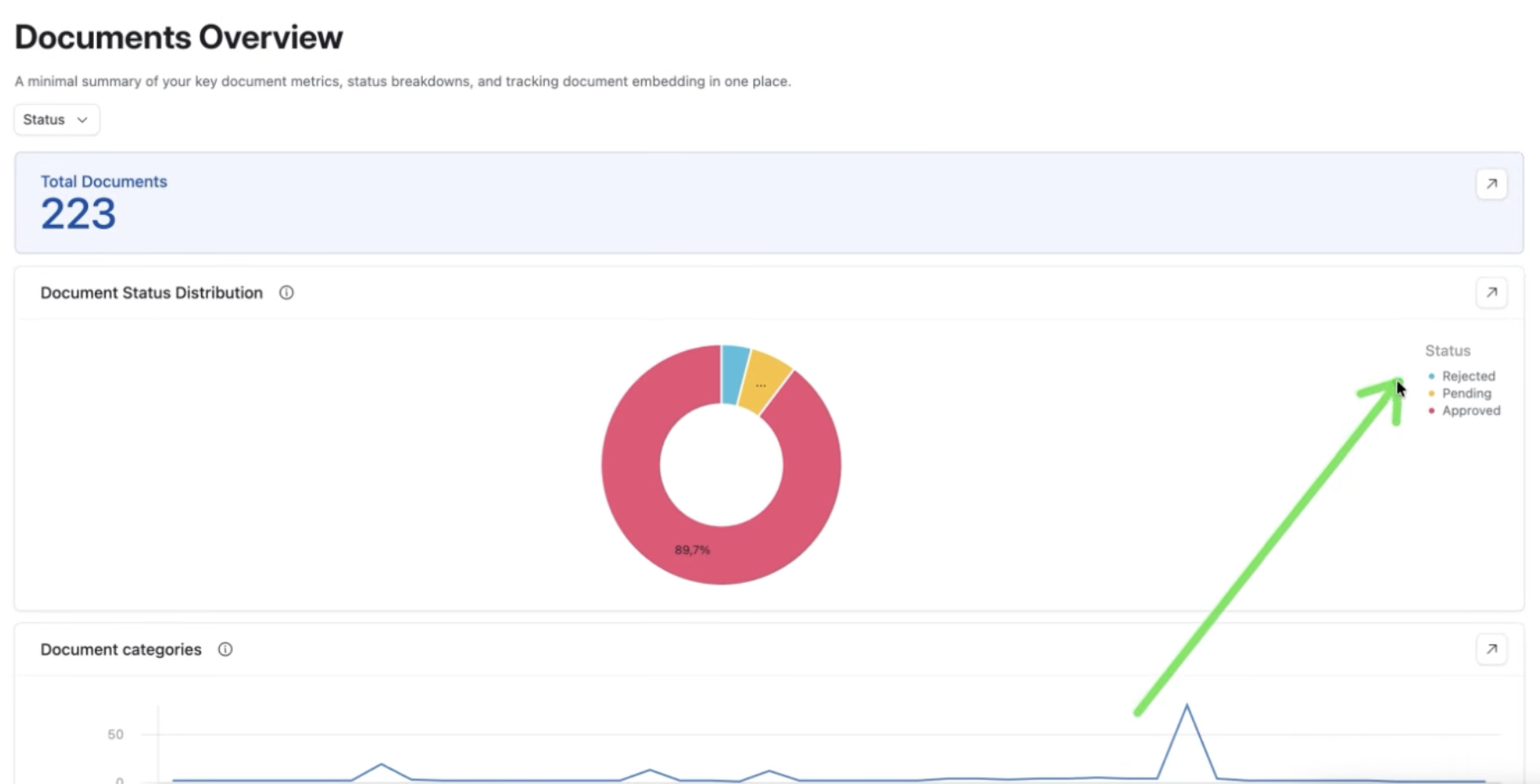
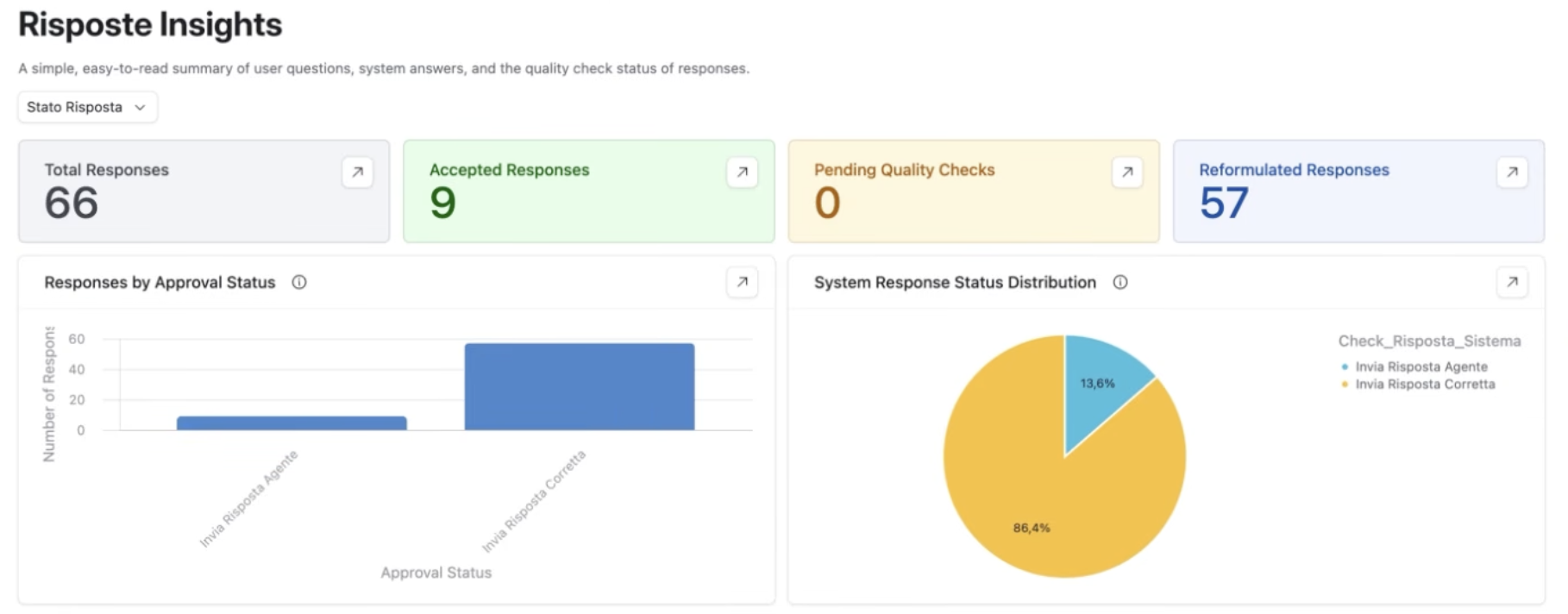
The practical result shows up when you compare the first weeks with the ones after: 86.4% of answers now go out directly as correct, with no need for reformulation. A share set to grow with every new interaction. As Derry Procaccini explained in the interview, this ability to keep training is what separates the system from the generic apps they tested and found inadequate for work of this clinical precision.
The effect on product quality
One of the most surprising effects of the system was its direct impact on how the supplements are formulated. With access to a far broader and better qualified evidence base, the SNM team was able to identify and correct biocompatibility problems that had been impossible to detect systematically.
One concrete example: the system showed that supplements with a single high-dose nutrient, such as vitamin B12 or folic acid, create metabolic spikes that unbalance all the related cofactors. That finding led to reformulating several product lines with more balanced food matrices, which respect the body's natural absorption mechanisms.
This kind of optimisation, which requires cross-referencing hundreds of studies on micronutrient interactions, would have been humanly impossible to run at scale without AI support.
The results
- 10,000 papers analysed a day: from a few dozen studies that could be selected by hand to a continuous 24/7 flow, qualified by the proprietary scoring algorithm before entering the Evidence Core
- An estimated €300,000 saved a year: the equivalent of at least three full-time researchers, for an output that is clearly higher in both quality and volume
- From 48 hours to a few minutes: response times for complex clinical requests, complete with precise, up-to-date bibliographic citations
- 86.4% of answers validated first time: the share approved directly without reformulation, trending upward thanks to continuous learning
- Better product quality: optimised food matrices and corrected biochemical imbalances that could not previously be identified at scale
Conclusion
The Swiss Natural Med case shows that artificial intelligence, when designed with rigour and human oversight, does not replace clinical expertise: it amplifies it. Derry Procaccini does not have less work, he has better work. He focuses on intuition, on the connections between findings, on the final quality of the product. The system handles the rest.
For a company whose identity rests on scientific excellence, that is not just an operational advantage: it is a structural competitive advantage no competitor without AI can match at the same cost.
"I used to spend 80% of my time downloading and qualifying scientific studies that often turned out to be methodologically weak. Today the system analyses thousands of sources a day and puts only the most solid evidence in front of me. We did not replace the doctor, we gave him back the time to be a doctor."
Want similar results for your company?
Tell us about your challenge. We'll find the right AI solution for your business together.
Let's Talk